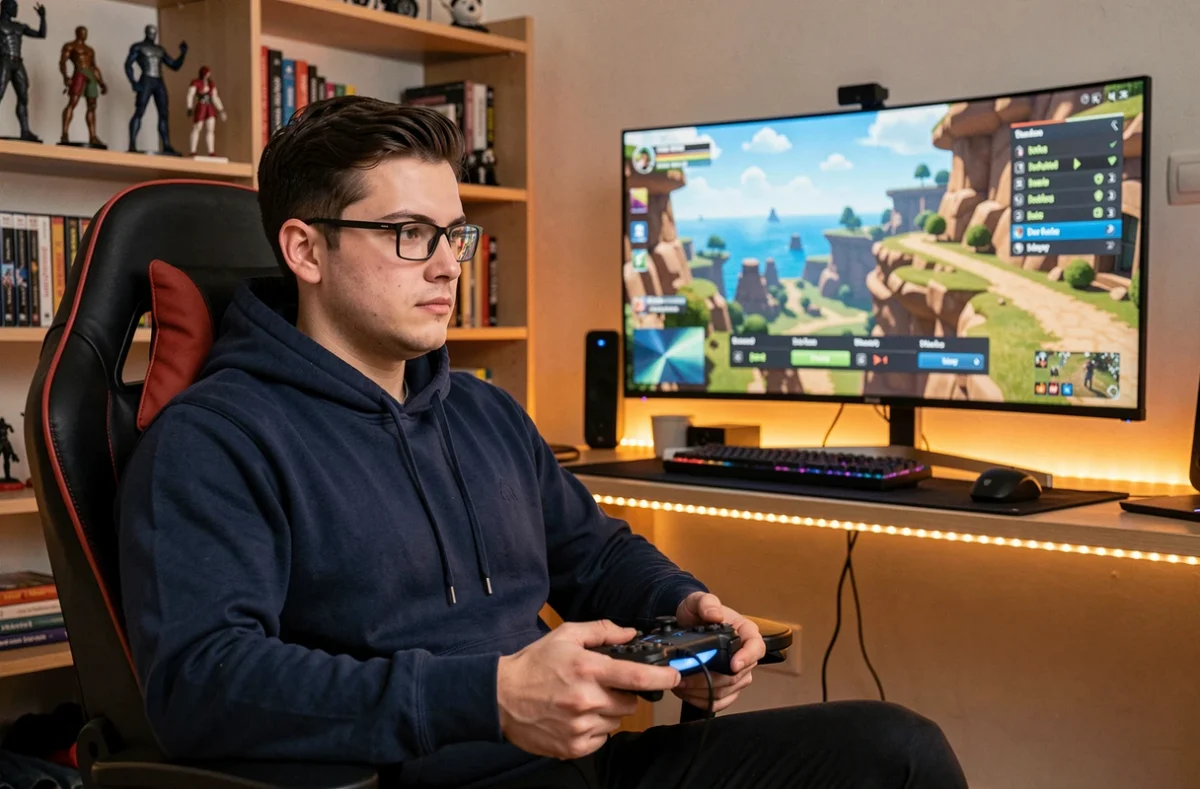
Buying a video game or gaming accessory based solely on the price on the box means overlooking a significant part of the budget. The DGCCRF warns about virtual currencies, subscriptions and in-game purchase prompts: the upfront cost does not reflect what you may spend over several months.
Choosing a game or peripheral that delivers lasting enjoyment means weighing three factors: the player’s profile, hardware compatibility and the true total cost over a year.
The total cost of a video game over one year: the calculation nobody makes before buying
The price in a store or online shop represents only a fraction of the total spend. For a multiplayer title, you often need to add a monthly or annual online subscription, season passes and cosmetic purchases.
Take a free-to-play battle royale game. The download costs nothing, but a battle pass costs a few euros each season, adding up to several dozen euros a year if you play regularly. A full-price game with a season pass can cost more than twice its original price within twelve months.
To estimate the total annual cost of a video game, list these expenses:
- The purchase price of the game or the monthly cost of a subscription to a game library
- Expected in-game purchases (virtual currency, season passes, paid expansions)
- The online subscription required for multiplayer on console
- The potential cost of a dedicated accessory (steering wheel, VR headset, special controller) and whether it is compatible with your current hardware
A game library subscription may seem like a good deal. It is if you try several different titles each month. A player who only plays one or two games a year will pay less by buying them individually. Compare your actual playtime with the titles available in the catalogue before signing up.
Specialist retailers such as 1gameshop.be make it possible to compare game and accessory prices across different platforms, helping you spot price differences between standard and complete editions.
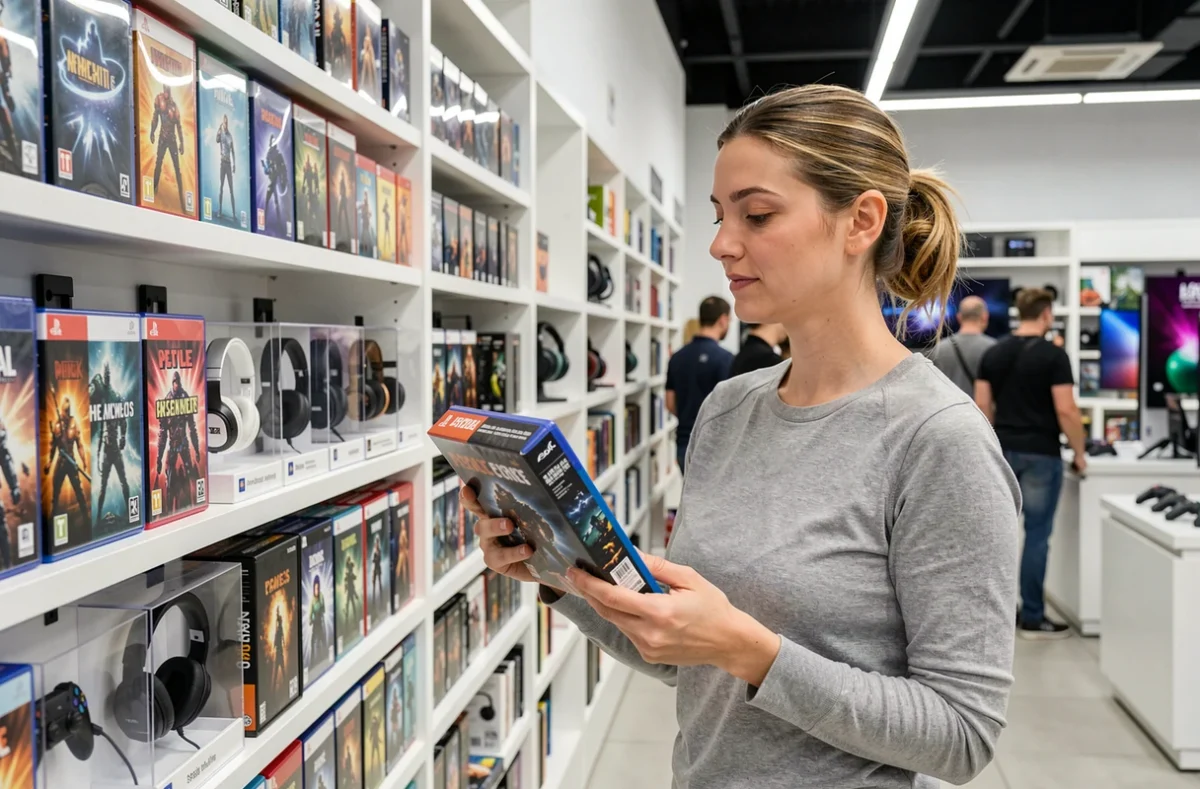
Choosing a video game that suits your player profile
Have you ever found that a game a friend loves leaves you completely cold? A title’s genre and pace matter more than its average rating.
Work out how much time you have to play
An open-world RPG often takes dozens of hours to fully appreciate. If you only play a few hours a week, a game like this could remain unfinished for months. By contrast, a racing game or multiplayer FPS offers short, satisfying sessions of just twenty minutes.
Choose a game whose gameplay loop fits the time you actually have. A title you enjoy in thirty-minute sessions is better than an ambitious game you’ll never have time to finish.
Check compatibility before you pay
PC games have minimum system requirements. On console, each generation has its own exclusives. Before buying, check that your hardware can run the game you want. A game that performs poorly, with stuttering or interminable loading times, spoils the experience far more than slightly dated but smooth graphics.
Gaming accessories: telling genuine comfort from a gimmick
The market is full of peripherals presented as essential. Three categories are worth considering carefully. The rest is often just marketing.
Gaming headset
A good headset can transform immersion and multiplayer communication. Comfort during long sessions matters more than sheer audio power. Check the weight, ear cushion padding and compatibility with your platform. A wired headset is more reliable and cheaper than a wireless model, unless you play far from your screen.
Controller or keyboard and mouse
On console, the included controller is enough for most players. A high-end controller with rear paddles is only worth it if you play competitively. On PC, a mechanical keyboard offers more precise keystrokes, but a good membrane model is perfectly suitable for casual gaming.
Consider how easy the hardware is to repair
The European Commission is preparing future repairability requirements for certain consumer electronics. Before buying a peripheral, check whether spare parts are available and review the manufacturer’s warranty policy. A headset with replaceable ear cushions will last several years longer than a model that is glued and sealed.
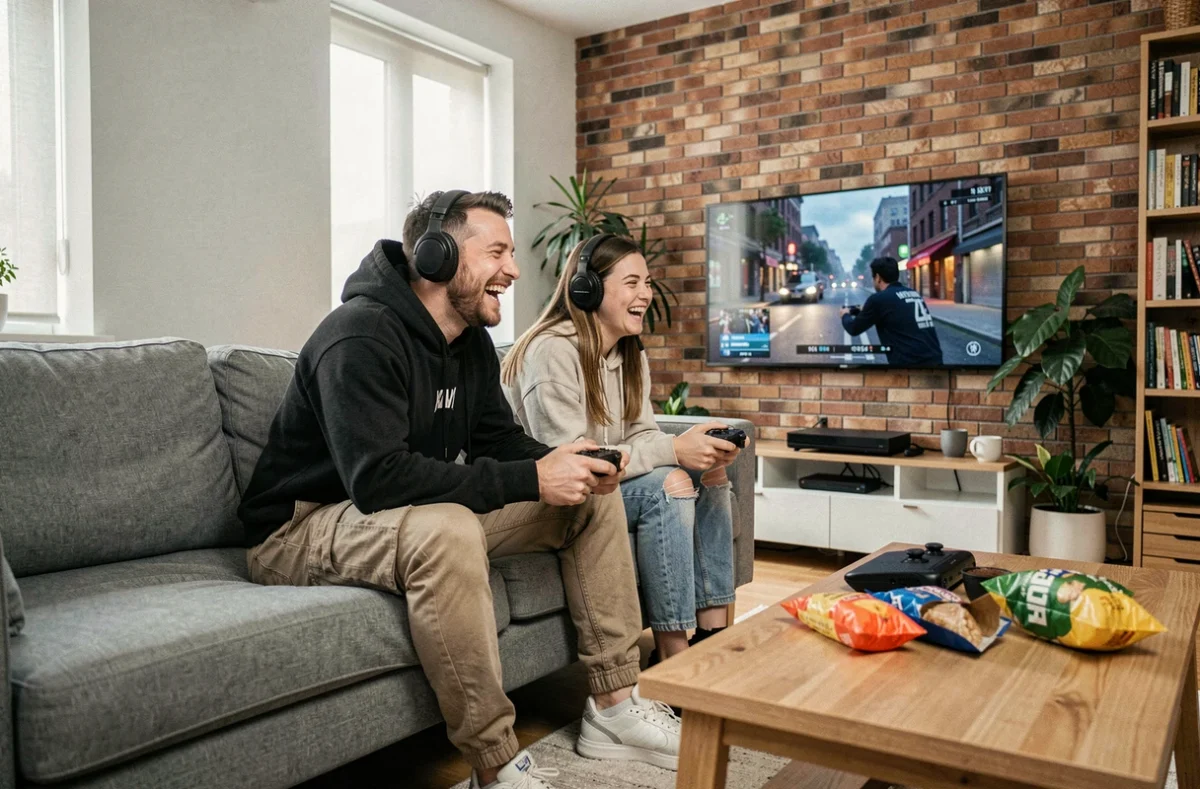
Gaming subscription or buying games individually: which option suits which player?
Subscriptions that provide access to game libraries are becoming more common. Whether they are worthwhile depends directly on your habits.
Why is this a personal choice? A curious player who tries four or five titles a month can easily get their money’s worth from a subscription. A player who sticks with a single competitive game for months will get no benefit from it. Calculate how much you spent on games over the past twelve months and compare it with the annual cost of the subscription you are considering.
Also bear in mind that a game you buy is yours to keep. A game available through a subscription may disappear from the catalogue if the publisher withdraws its licence. If you plan to play a title for a long time, buying it is the more reliable option.
Online store accessibility and a better shopping experience
Since 28 June 2025, the European Accessibility Act has applied to certain online retail services. An accessible store benefits all players, not just those who use assistive tools. Clear navigation, working search filters and complete product pages with technical specifications all help you make an informed choice without wasting time.
Before confirming a purchase, check that the game or accessory listing specifies exact platform compatibility, what is included in the edition on offer and any recurring fees. A well-planned purchase helps you avoid disappointment and returns—the best way to enjoy your purchase without any nasty surprises.