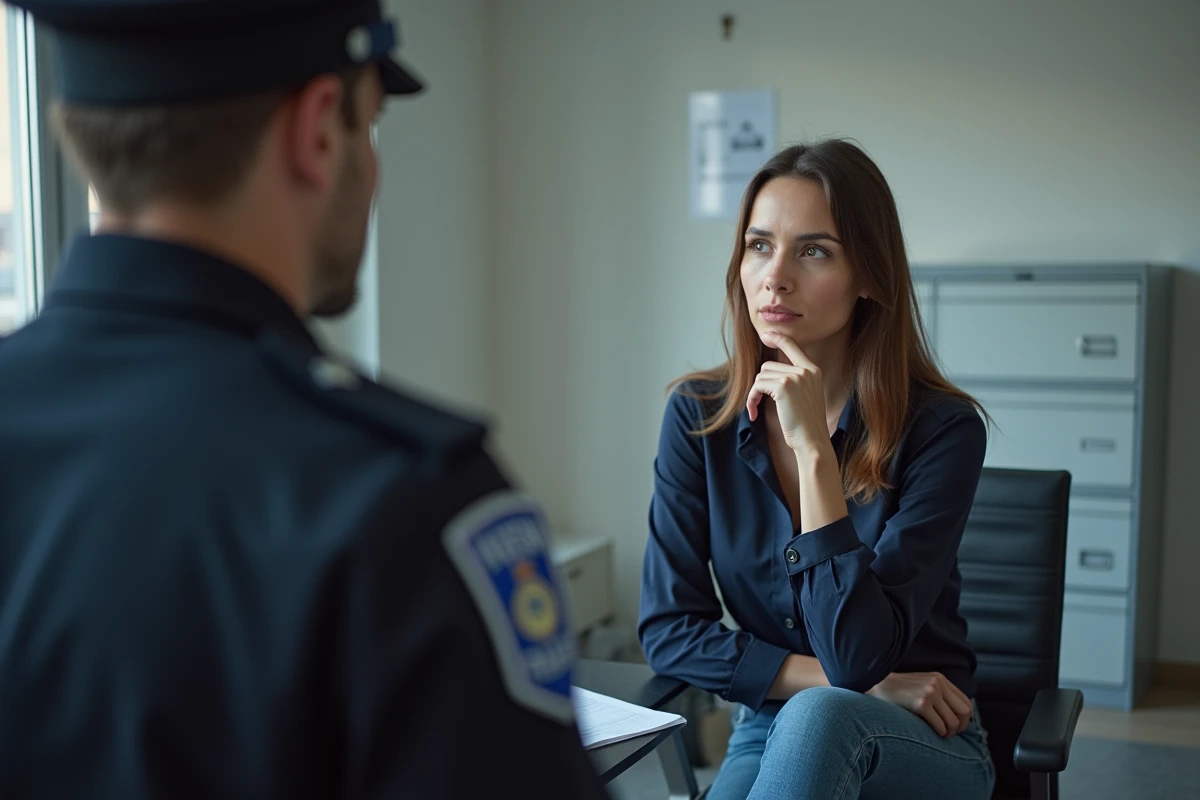
Summons that arrive without warning, official letters that sow doubt: receiving a request for an interview at the gendarmerie can be surprising, especially when you have nothing to hide. What many do not know is that the absence of a response does not immediately lead to sanctions. However, refusing or neglecting several summonses can prompt the authority to employ stricter measures, even resorting to requisition.
The rules governing the interview vary depending on the position of the person being heard and the context of the case. This ambiguity sometimes fuels confusion about the rights to be respected. However, there are solid guarantees that take effect from the first summons, including when one is not directly implicated by the procedure.
Summons to the gendarmerie: why and in what cases can one be heard as a witness?
A summons to the gendarmerie is never trivial. It falls within several frameworks: preliminary investigation, flagrance, or judicial information. The judicial police officer, sometimes under the instruction of the public prosecutor, sometimes on their own initiative, seeks to hear any person likely to shed light on a case. This ranges from a relative of a victim to someone who has simply witnessed a scene or who holds crucial information about a suspected offense.
Here is what you can find in a gendarmerie summons and witness interview:
- The reason for which your presence is requested
- The date and location of the interview
- Possibly, a provisional legal qualification of the facts
Receiving this document does not make you a suspected person. It is a standard procedure used in cases of accidents, thefts, violence, and sometimes even for more complex matters. You may also be called if you witnessed an attempted offense or if you possess information that the judicial police need to verify.
The gendarmerie, thanks to the proximity of its brigades, can quickly gather testimonies. Interviews take place either at the police station or at the brigade, depending on the geographical area. If the procedure requires it, you may be asked to appear before the court. At these times, the cooperation of the witness becomes an essential part of the judicial process, where loyalty and clarity are expected.
What are your rights and obligations during a witness interview?
Appearing at a summons to the gendarmerie as a witness is not optional. It is an obligation provided for by the code of criminal procedure. Once on site, the framework is established: the witness must take an oath to tell the truth, under penalty of prosecution for perjury in case of falsehood.
Regarding the right to remain silent, it does not carry the same weight as during police custody. As a witness, responding in good faith to questions remains the rule. Only individuals benefiting from professional secrecy, such as lawyers or doctors, can remain silent on certain subjects covered by this secrecy.
The notification of rights is systematically recorded in the interview report. For minors, the presence of a parent, guardian, or curator is required. Protected adults also have appropriate assistance modalities tailored to their situation. Even if it is not automatic as in police custody, it is possible to request assistance from a lawyer.
In certain cases, there is the possibility to request legal aid, particularly for individuals with low resources. Investigators may also request the taking of fingerprints or a photograph, only if the procedure justifies it and always under strict legal control. Each step is recorded, and each statement is entered in the interview report to ensure transparency.
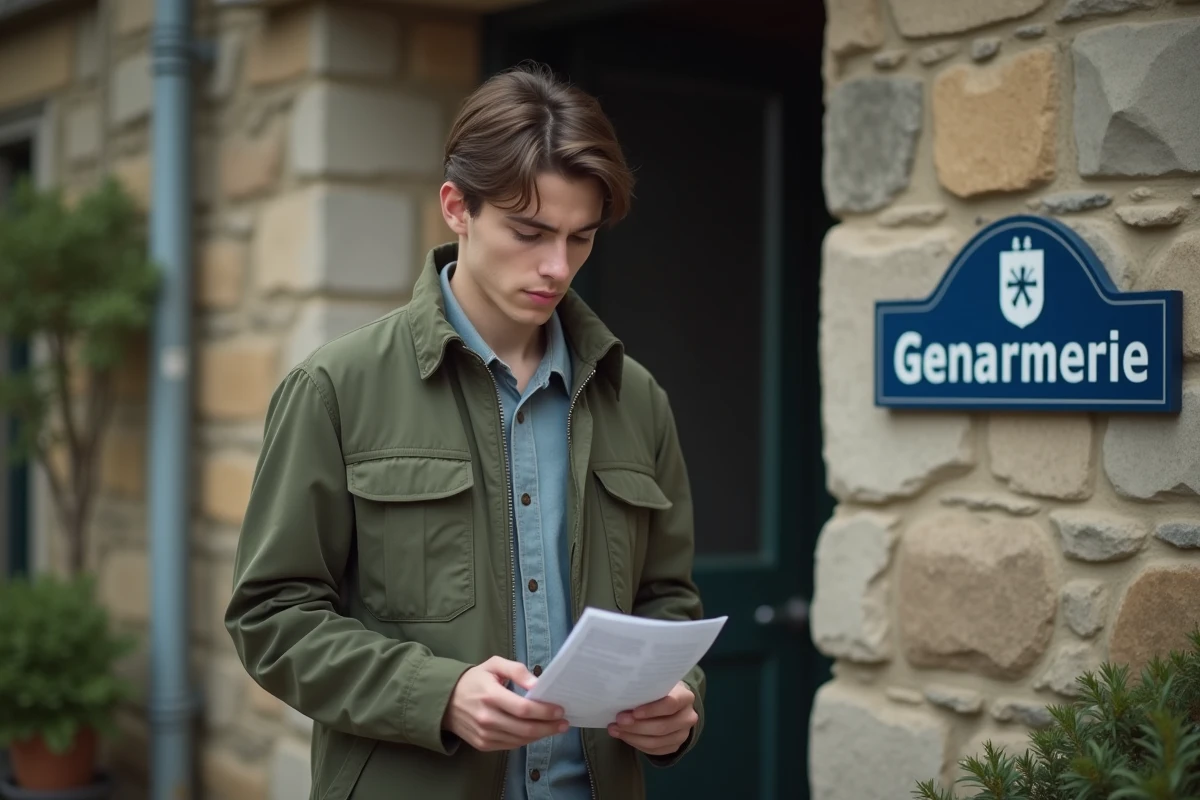
How to react appropriately after a summons to protect your interests?
In the face of a summons from the gendarmerie, the first reaction often oscillates between surprise and concern. To approach the situation effectively, it is recommended to prepare in advance the documents mentioned in the notice. Don’t forget your identity document and, if applicable, a proof of residence. Review the facts mentioned, gather chronological information: dates, locations, circumstances. The clearer your account, the smoother the interview will be.
Depending on the reason you are being heard, whether as a witness, complainant, or someone likely to shed light on specific facts, it may be useful to gather certain evidence. Here are some items to collect to prepare for your appearance:
- Messages, emails, photos, or any digital element useful to the investigation
- A brief list of relevant facts and names, based solely on objective elements
The presence of a lawyer is possible, even during a simple interview, especially if the context seems complex or if the investigation is part of a formal judicial procedure. Legal advice can guide you, ensure your rights are respected, and anticipate possible outcomes: dismissal, alternatives, opening an investigation by the public prosecutor or the investigating judge.
Always keep in mind that the relationship with the investigator relies on sincerity. Provide only elements you can confirm, respond accurately, without attempting to influence the course of the investigation. A controlled interview allows you to maintain your position in the procedure and ensures that the facts are understood without distortion.
A simple appointment can sometimes open the door to unsuspected stakes. It is best to present yourself prepared, clear-headed, and determined to make your voice heard, so that the truth is neither distorted nor erased.