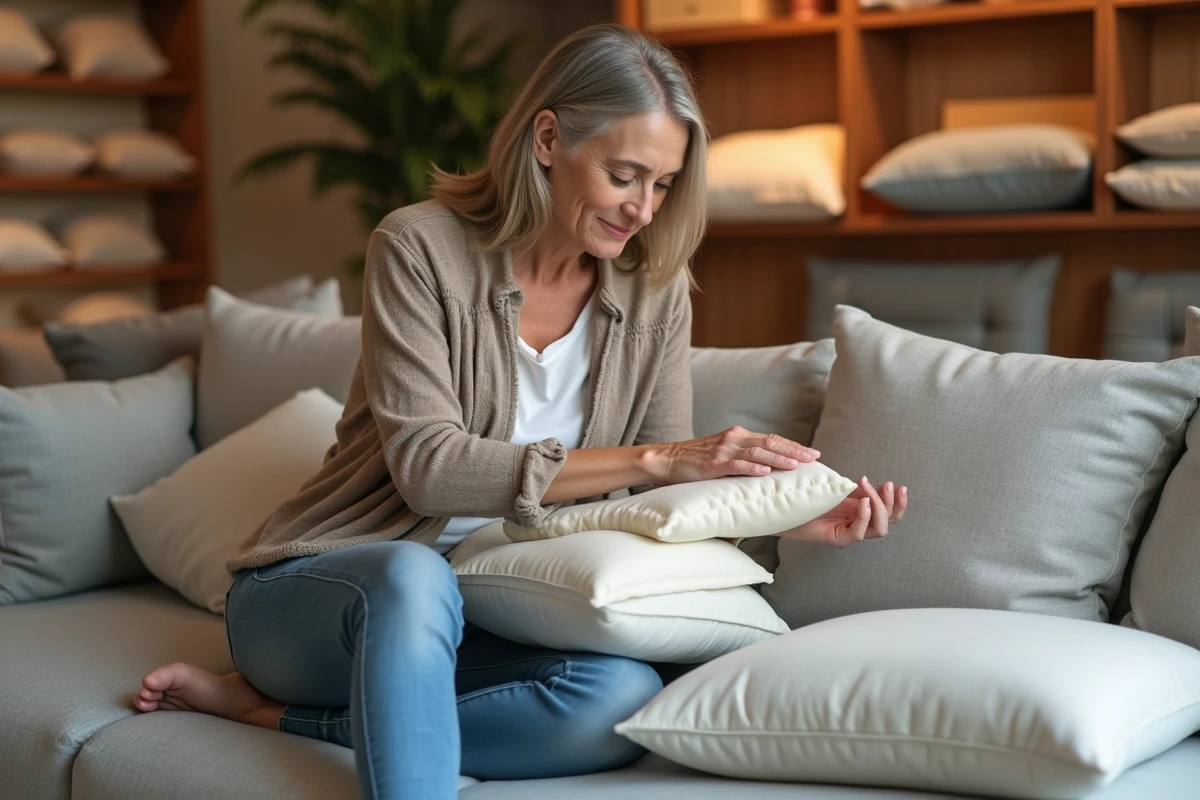
Density does not always guarantee the durability of foam. Some compositions display deceptive resilience despite a firm appearance. Conversely, soft foams sometimes resist sagging better than more compact variants.
The interaction between support, frequency of use, and type of foam creates unexpected results. Legislation also imposes specific standards on materials, influencing the choices available for the renovation or manufacture of sofas and cushions.
Overview of sofa foams: understanding the differences and their uses
Choosing the right foam is not improvised: each option meets different performance, comfort, and usage criteria. While polyurethane foam is the benchmark for daily seating, it is because it combines robustness, flexibility, and affordability. It is found in the majority of indoor sofas, ideal for seat or back cushions due to its proven effectiveness. On the other hand, polyether foam attracts with its price but quickly shows its limits, reserved for occasional seating or more casual uses.
When aiming for lasting comfort, high resilience foam stands out: higher density, firm support, controlled bounce. It is the choice for heavily used sofas, high-traffic areas, or establishments open to the public. For those who prefer a enveloping effect, memory foam conforms to the shape and limits pressure points, perfect for convertible sofas or guest mattresses, where ergonomics matter as much as comfort.
People sensitive to natural materials turn to latex foam or KALEO SOJA OEKO TEX, recognized for their breathability and low environmental impact. Latex foam, in particular, combines elasticity and ventilation, an asset for those looking to avoid overheating. Outside of interiors, open-cell marine foam adapts to climate variations and humidity, while AQUASOFT closed-cell foam promises solid seating even on a boat or an exposed terrace.
On the cushioning side, the range expands with polyester fibers, wool, or feathers and down that add softness or a cozier feel to cushions. It is these combinations that allow for refining comfort according to tastes and needs.
To delve deeper into the topic, consult expert recommendations on the ideal foam for sofas: you will find comparisons and feedback that clarify choices, taking into account technical or budgetary constraints.
What criteria should be prioritized to choose the best foam according to your needs?
The comfort of a sofa is not just about the first impression. Several parameters come into play and deserve careful consideration. First point: density. It measures support and the expected lifespan. For a indoor sofa used daily, it is better to aim for a density between 30 and 35 kg/m³. Below this, the foam compresses quickly; above this, the support becomes firmer, which is better suited for communal use or models intended to be used without restraint.
Firmness should also be adjusted to the use. Some appreciate a soft welcome, while others seek a tonic effect or more marked support. High resilience foams often offer the best compromise, while memory foam is appealing for its ergonomic qualities, especially on a sofa bed or convertible bench, where one sleeps as much as one sits.
The thickness of the foam should not be overlooked: for seating, count between 10 and 15 cm, while the backrest requires at least 5 cm to ensure comfort. The very architecture of the sofa plays a role: a structure with straps, springs, or rigid will guide the selection towards different foams. To avoid premature sagging, prefer a custom cut, adapted to the model and the morphology of the furniture.
Finally, certification provides an additional guarantee: the labels CertiPUR-US or OEKO TEX ensure the absence of undesirable substances. This detail matters as much for the health of users as for the quality of the foam. The price, finally, should be viewed in light of the expected durability and comfort: it is better to invest in solid foam than to multiply replacements.

Expert tips for effectively renovating or reupholstering your sofa
A sagging sofa or cushions that lack support do not necessarily mean furniture to be thrown away. Reviving your sofa starts with carefully removing the old upholstery foam, while preserving the structure. Take the time to examine straps and supports: it is the base that conditions the final result.
To replace the foam, prefer a custom cut that can perfectly fit the contours of the furniture. Certified high resilience foam ensures comfort that withstands the test of time and optimal support. For the backrest, a softer foam or a blend of polyester fibers/feathers guarantees a plusher welcome, as long as the proportions are well balanced to avoid hollows.
Here are the steps to follow to succeed in your reupholstering project:
- Carefully measure each element to be upholstered: length, width, thickness, nothing is left to chance.
- For a clean cut, use a power saw or a long-bladed knife to obtain uniform blocks.
- Plan for a firm adjustment: the foam will naturally relax after a few weeks of use, so it is better to anticipate this phenomenon.
For specific configurations, corner sofas, custom benches, antique furniture, the support of a custom foam cutting service makes a difference. This expertise, widely mastered in France, allows for meeting the constraints of each piece of furniture, whether it is a family living room or a personalized reading nook.