What concrete parameters distinguish a peaceful family home from an environment that generates daily stress? Modern family life is influenced as much by the choice of wall color as by the organization of a shared space. Several recent studies in environmental psychology and interior design allow us to measure the real impact of certain decorative and creative choices on parental and child well-being.
Parental mental load and interior environment: what the data shows
A literature review published in the International Journal of Environmental Research and Public Health (Choi et al., 2023) establishes a correlation between a clutter-free interior and reduced parental stress. Three factors emerge in this analysis: the reduction of visual noise, clear organization of storage, and the limitation of the number of objects to clean.
These results shift the focus of decoration. The issue is not choosing between Scandinavian or bohemian style, but understanding which physical elements of the home affect the fatigue perceived by parents of young children.
| Measured Factor | Observed Effect on Parental Stress | Associated Decorative Lever |
|---|---|---|
| Visual noise (number of visible objects) | Increased perceived stress when the density of objects is high | Closed storage, cleared surfaces |
| Organization of storage | Significant reduction in the mental load related to cleaning | Modular furniture, labeled bins accessible to children |
| Colors and light | Soft hues and natural light promote calm | Neutral color palette, matte wallpaper, light curtains |
The table above summarizes the main axes. However, none of these studies set an ideal number of objects per room. The notion of a threshold remains individual, linked to the size of the household and the age of the children.
Resources like mademoisellecamille.fr explore this gentle approach to family life, intersecting creative inspirations and concrete design choices.
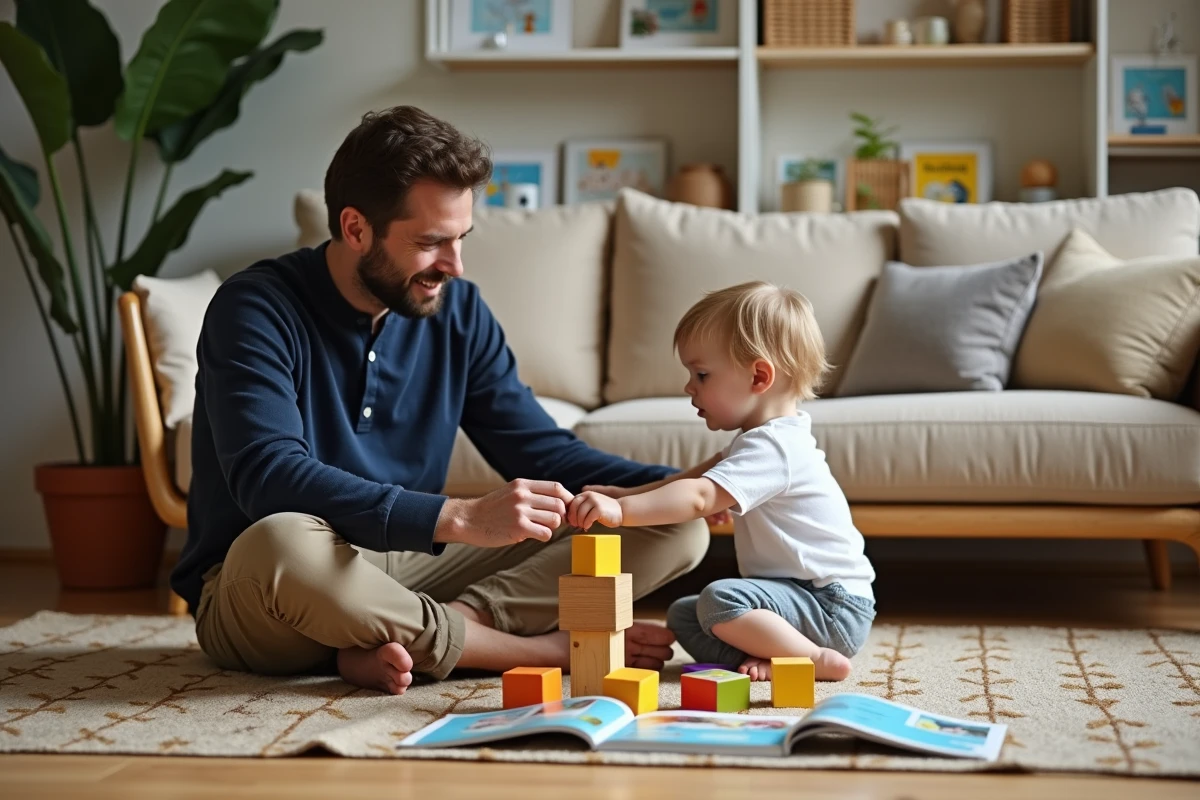
Family third place: designing a shared space rather than a closed office
The Observatory of Daily Life at Home (Ademe / Plan Bâtiment Durable) has noted since 2022 a reconfiguration of living spaces around shared uses. Remote work and occasional home schooling have given rise to what some call the “family third place”: a corner that serves as both an office, a creative workshop, and a homework area.
This shift changes the way we think about layout. A closed office consumes an entire room. A shared space, on the other hand, can be integrated into the living room or a large bedroom, provided a few principles are respected.
- Visually delimit the corner with a change of materials on the floor (thick rugs, cork tiles) rather than with a partition that blocks light
- Install a double-height work surface: adult space on one side, child space on the other, so that everyone can work simultaneously
- Plan for vertical storage (wooden wall shelves, DIY pegboard) that frees up the floor and remains accessible to the little ones
- Choose adjustable lighting: desk lamp for homework, low-voltage string lights for a creative atmosphere
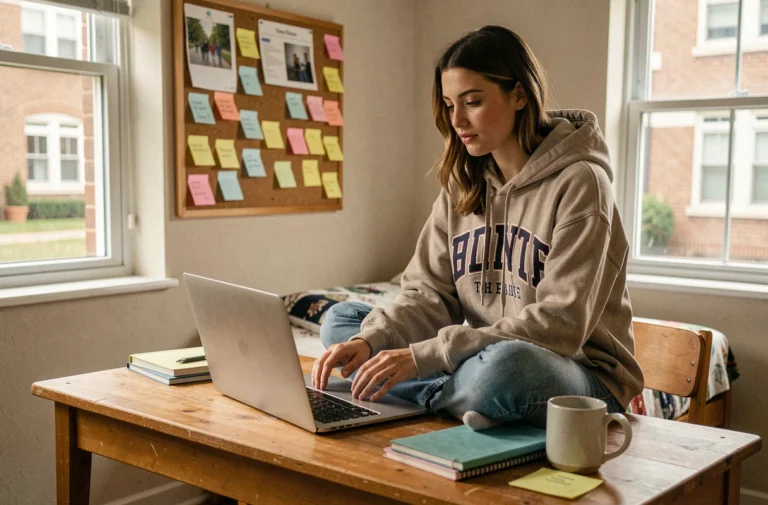
This type of layout requires giving up the “perfect” room seen in magazine photos. The reality of a family third place is a wall covered with pinned drawings next to a video conferencing screen. This visual cohabitation is part of the project.
Soft colors and natural materials: slow choices that stand the test of time
The slow decor trend, often reduced to a minimalist aesthetic, is based on a measurable principle: fewer synthetic materials, less turnover, less waste. For a family, this translates into concrete trade-offs.
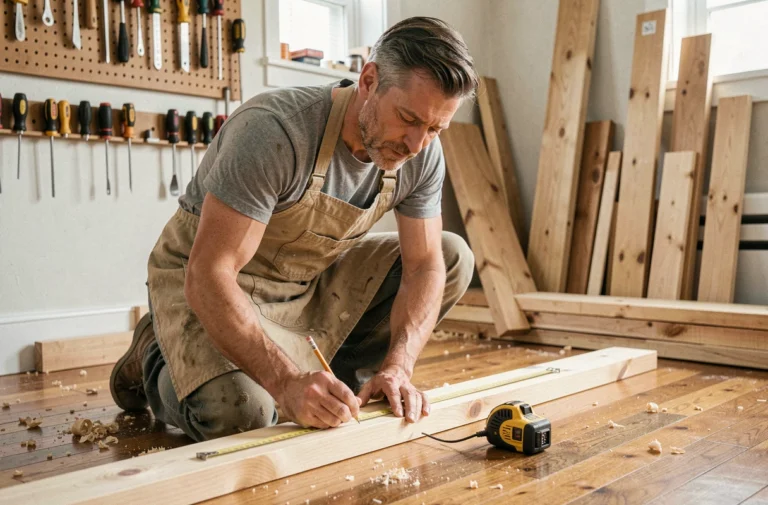
Raw wood (pine, beech, unvarnished oak) ages better than a melamine panel piece of furniture under the onslaught of a three-year-old. Signs of life (scratches, stains) integrate into the patina rather than deteriorating the appearance.
Wallpaper is making a comeback in children’s rooms, but not in the same form as twenty years ago. Current ranges made from recycled paper, printed with water-based inks, allow for the creation of an accent wall without solvents. A single wall is enough to transform a room without overloading the visual space.
In terms of colors, powdery palettes (sage green, light terracotta, grayish blue) dominate family spaces for a functional reason: they hide fingerprints better than pure white. White remains relevant on ceilings and moldings, but on a wall at child height, a slightly saturated hue cleans more easily and maintains a clean appearance longer.
Creative family projects: DIY as a shared ritual
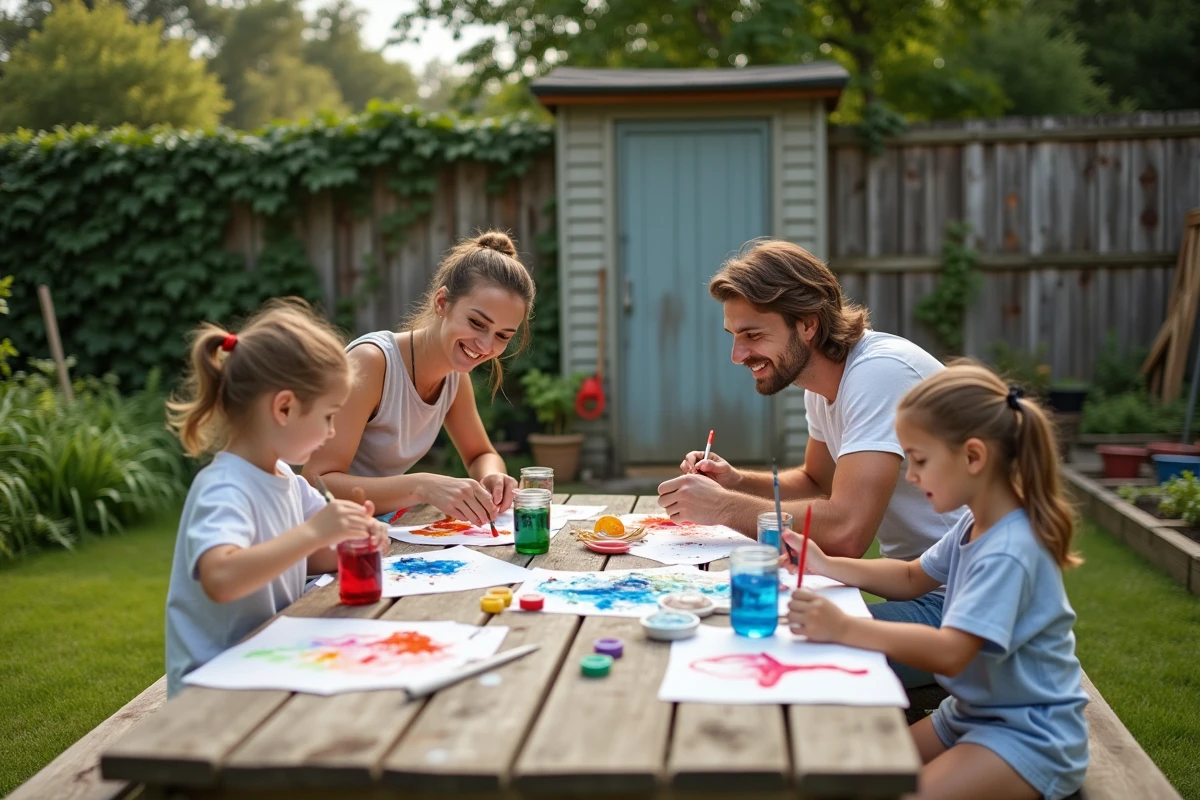
The survey “Parents and Everyday Ecology” from the Observatory of Parenting and Digital Education reveals that families who incorporate regular hands-on activities (making objects, customizing furniture, indoor gardening) report a higher sense of family cohesion than those who limit themselves to digital leisure.
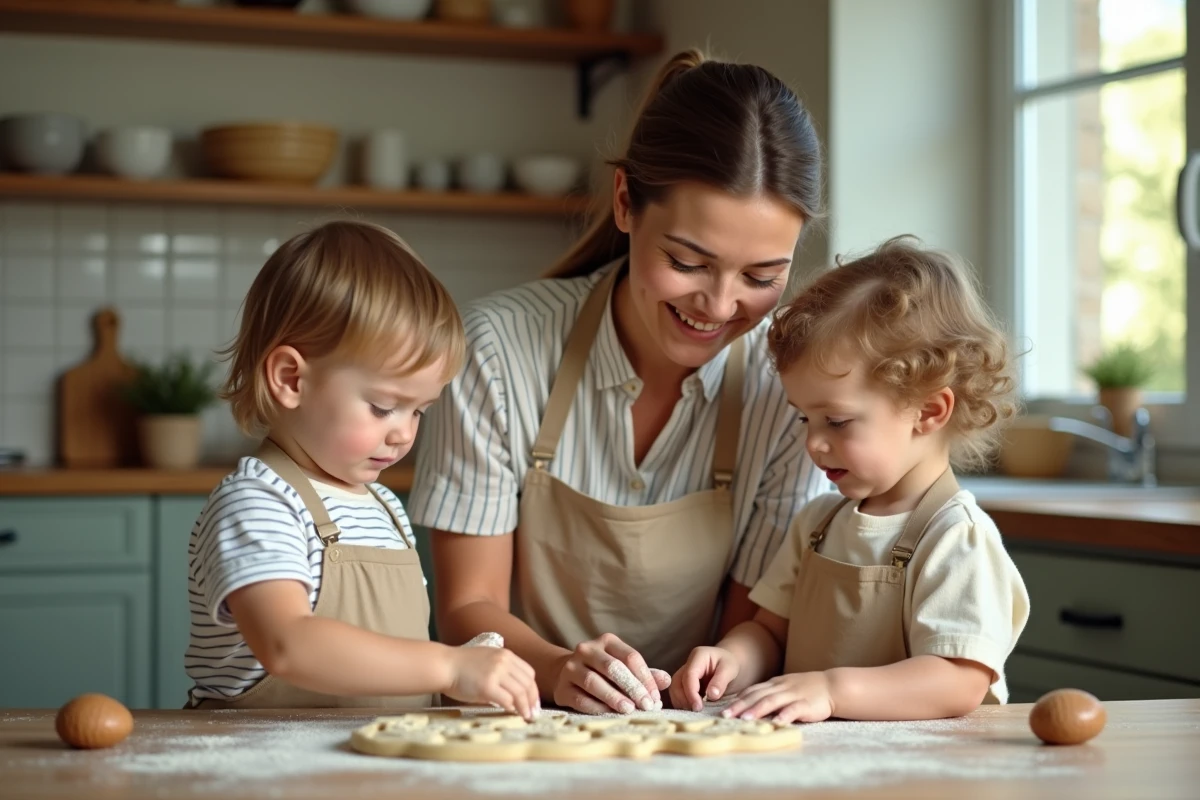
Family DIY does not require woodworking skills. Here are some realistic ideas that can be tested on a Sunday afternoon:
- A driftwood photo frame collected during an outing, assembled with strong glue and hung on the living room wall
- A papier-mâché flower pot, painted in colors chosen by each family member, to hold an indoor plant
- A free expression wall: a large cork board or chalkboard paint in a hallway, where everyone can pin or draw whatever they want
These projects create imperfect, visible objects that tell a story. Their decorative value is secondary to their emotional value, but their presence in the shared space contributes to the visual identity of the home.
Modern family life is built less around a catalog of inspirations than around a series of daily micro-decisions: a wooden piece of furniture rather than plastic, a wall cleared for drawings, a shared corner rather than a closed room. The available data confirms that these choices, modest when taken individually, produce a measurable cumulative effect on the well-being of the household.